

Rats vs Mice: How to Tell Which One You Have
By Zubair on September 27, 2026 · · About the author
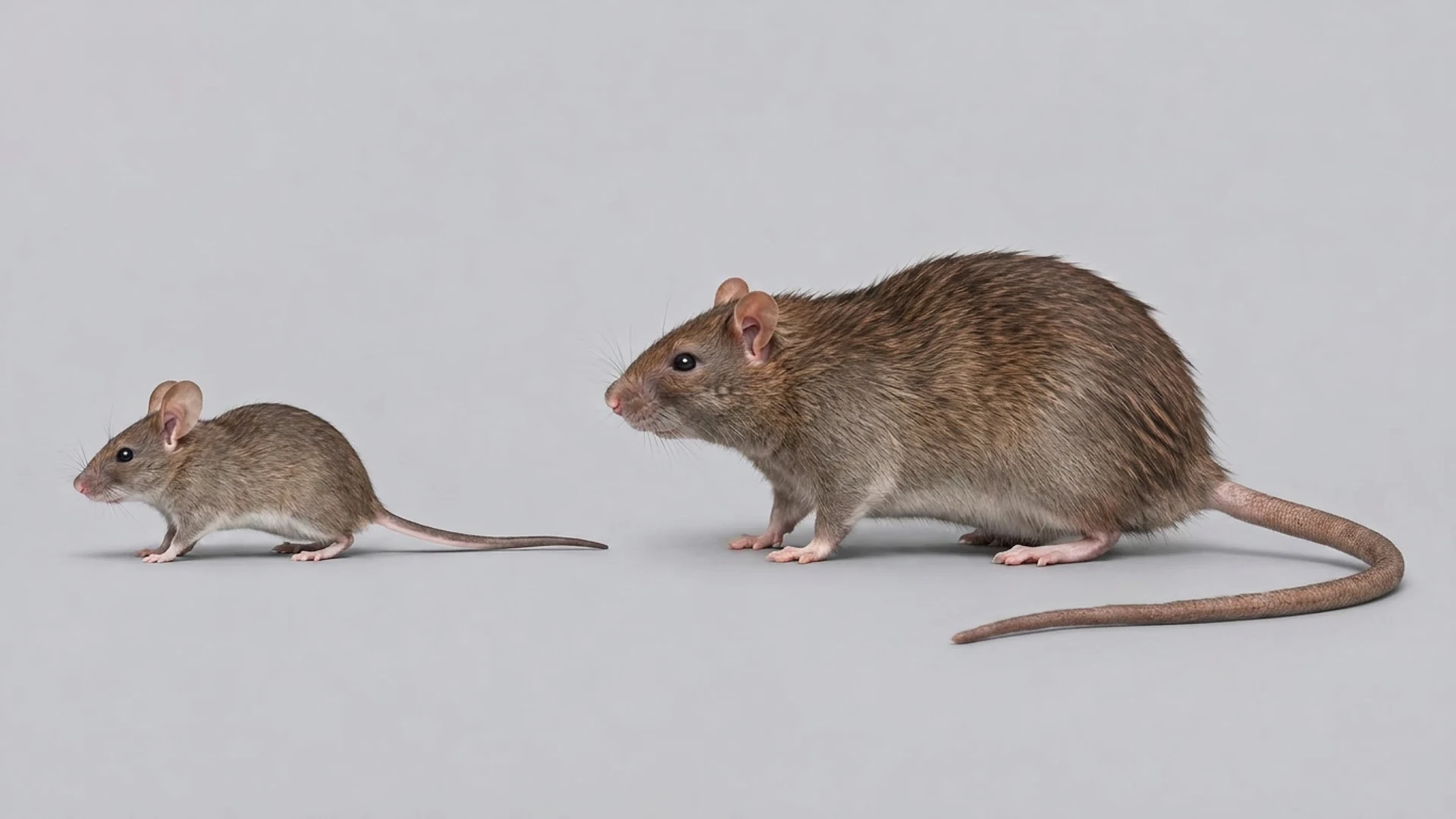
Table of Contents
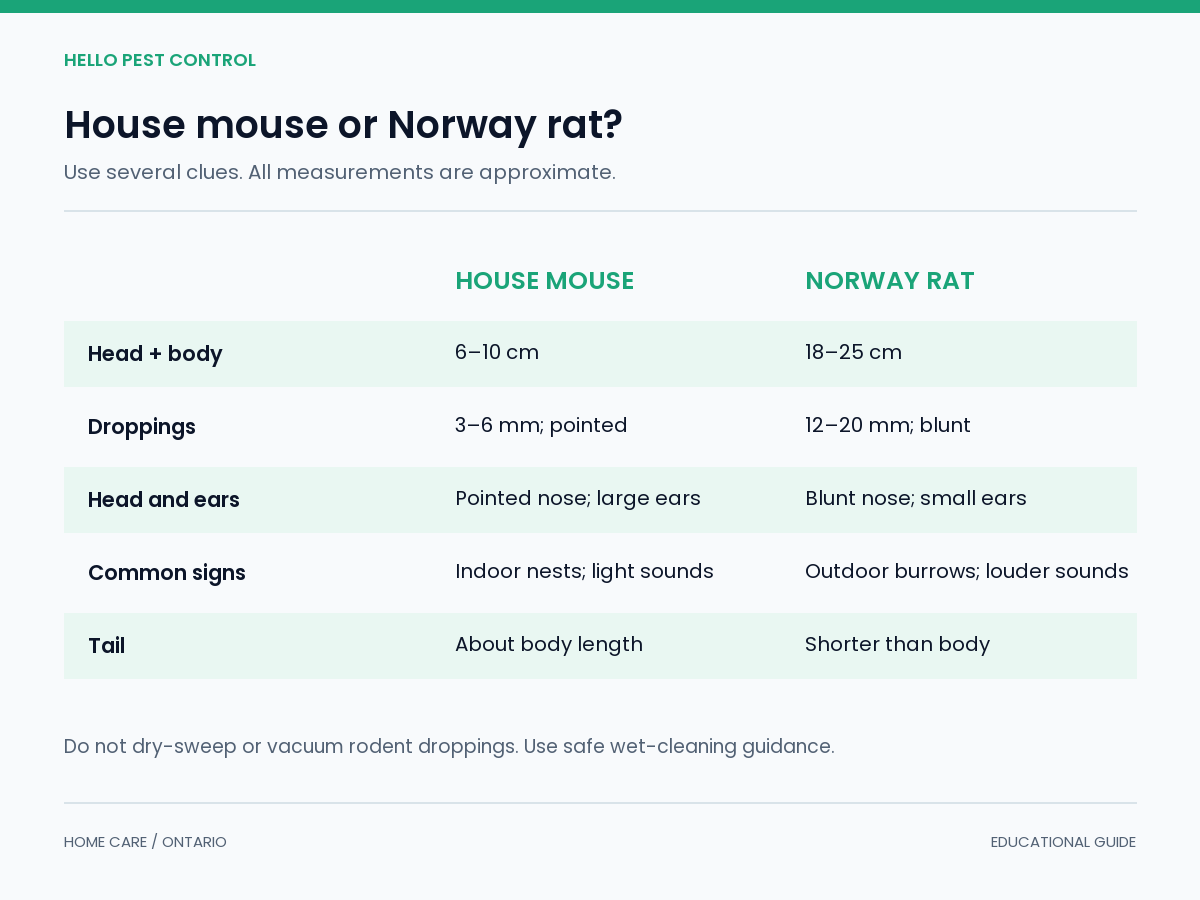
The quickest way to tell rats from mice is the droppings: mouse droppings are the size of a grain of rice (3–6 mm), while rat droppings are about the size of a raisin (12–20 mm) and blunt at the ends. Rats are also much bigger, louder, burrow outside and avoid new objects, while mice are small, curious and nest inside walls and cupboards. Knowing which one you have matters, because the treatment is different.
Rats vs mice at a glance
| House mouse | Norway rat | |
|---|---|---|
| Body length | About 6–10 cm, plus a tail of similar length | About 18–25 cm, tail shorter than the body |
| Weight | About 20 g | About 200–500 g |
| Head | Small, pointed nose, large ears | Blunt nose, small ears |
| Droppings | 3–6 mm, rice-shaped, pointed ends | 12–20 mm, capsule-shaped, blunt ends |
| Smallest gap | About 6 mm (a pencil’s width) | About 2 cm (the size of a quarter) |
| Where it lives | Inside walls, cupboards, insulation | Burrows outside; comes in to feed |
| Behaviour | Curious; investigates new things | Cautious; avoids new objects for days |
| Sounds | Light scratching and scurrying | Heavier thumping and loud gnawing |
1. Look at the droppings
Droppings are the most reliable clue, and you’ll usually find them before you see the animal.
- Mice: dozens of small, dark, rice-shaped droppings scattered along baseboards, in drawers, under sinks and behind appliances.
- Rats: fewer but much larger droppings, often grouped in one spot near food, garbage or along a runway.
Don’t handle droppings with bare hands or sweep them dry. See how to clean up droppings safely.
2. Listen at night
Both are most active after dark. Mice make light, quick scratching sounds in walls and ceilings. Rats sound heavier: thumping, dragging and loud gnawing, often in the basement, the lower walls or under the floor.
3. Check outside for burrows
Norway rats dig burrows along foundations, fences, sheds, decks and garbage areas. Look for holes about 5–8 cm across with smooth, packed edges and fresh dirt nearby, plus worn runways through grass. Mice rarely leave anything like this.
4. Look at the damage
- Mice chew food packaging, paper, insulation and wiring, and shred material into nests.
- Rats gnaw harder things: wood, plastic bins, door corners, pipes and even soft concrete. Gnaw marks are larger and rougher.
5. Notice greasy rub marks
Both leave dark, greasy smudges along the routes they travel, but rat rub marks are wider and lower along walls and foundations.
Still not sure? Send us a photo of the droppings and we'll tell you.
Ask a TechnicianWhy it matters: rats and mice need different treatment
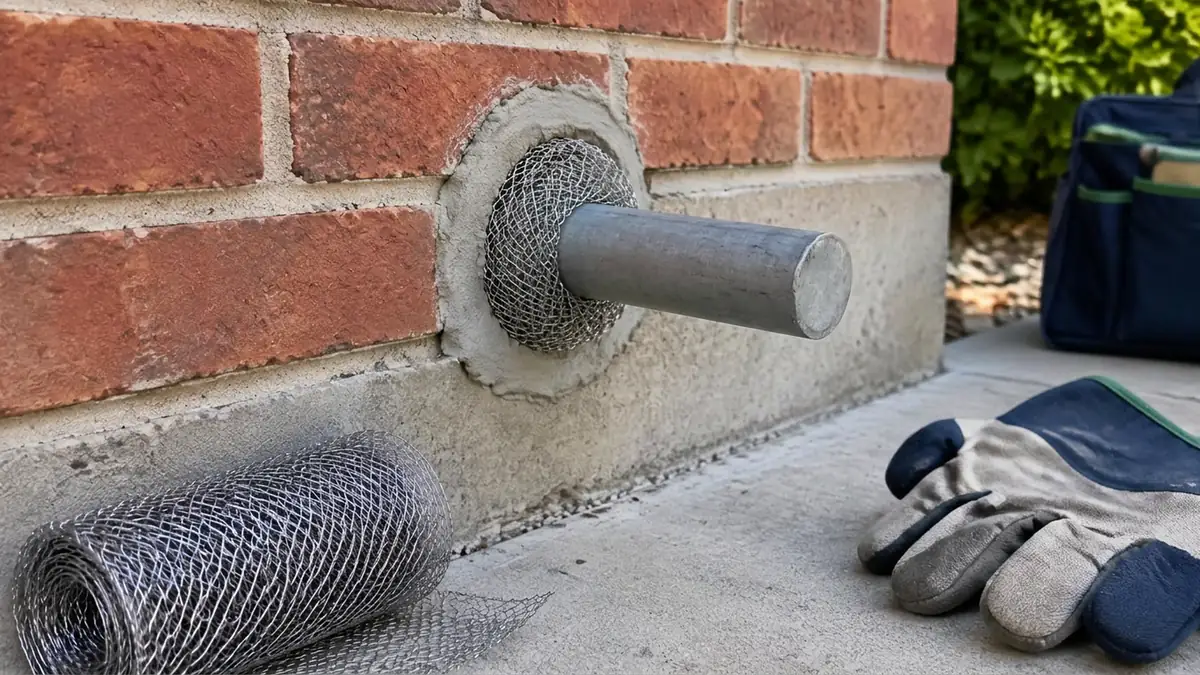
- Gap size. Sealing for mice means closing gaps down to about 6 mm; for rats, anything around 2 cm. Rats can also chew through materials that stop mice, so exclusion uses heavier materials.
- Trap strategy. Mice investigate new traps quickly. Rats avoid new objects, so traps and stations are often left unset for a few days first and placed along their exact runways.
- Inside vs outside. Mouse control focuses on the inside of the home. Rat control usually starts outside, with burrows, garbage and exterior bait stations.
Why rats are such a problem in Toronto
Toronto topped Orkin Canada’s 2025 list of Canada’s rattiest cities, with Mississauga (#6) and Scarborough (#9) also in the top ten. Construction, older infrastructure, dense housing and food waste give Norway rats plenty of shelter and food, and the City of Toronto announced a rat response plan in 2025. If you see burrows or large droppings, act early; rat populations grow quickly.
What to do next
- Mice: follow our guide on how to get rid of mice, or book mice control.
- Rats: rats are harder to handle yourself. See rat control for how we find burrows, remove rats and seal the gaps.
- Not sure: our rodent removal service starts by confirming which one you have.
Rats or mice, we find how they're getting in and seal it for good.
See Rat ControlRelated Reading
How to Get Rid of Mice (What Works in GTA)
How to get rid of mice for good: find how they get in, trap the ones inside, seal the gaps and clean up safely. Plus when to call a Toronto exterminator.
Stop Rodents in Scarborough: 9 Expert Pest Tips
Bad smells and scratching at night can mean rodents. 9 expert tips to keep mice and rats out of your Scarborough home, plus what removal costs.
Frequently Asked Questions
How can you tell rat droppings from mouse droppings?
Mouse droppings are small (about 3–6 mm) and pointed at the ends, like grains of rice. Rat droppings are much larger (about 12–20 mm), thicker and capsule-shaped with blunt ends.
Are rats or mice more common in Toronto?
Both are common. Mice are the most frequent indoor rodent in GTA homes, especially in fall. Norway rats are widespread too: Toronto topped Orkin Canada's 2025 list of Canada's rattiest cities, with Mississauga sixth and Scarborough ninth.
Can you have rats and mice at the same time?
It's uncommon inside the same space, because rats prey on mice, but a property can have mice indoors and rats burrowing outside. Identify each one from its droppings and signs.
Are rats more dangerous than mice?
Both spread disease through droppings and urine and both chew wiring. Rats cause more structural damage because they're larger, gnaw harder materials and burrow under foundations, slabs and decks.
Why do rats and mice need different treatment?
Rats are cautious and avoid new objects for days, so traps must be placed and timed differently. They also enter through larger gaps and live in burrows outside, so exclusion and exterior control matter more.