

How Do Exterminators Get Rid of Mice in Walls? What Actually Happens
By Zubair on November 14, 2026 · · About the author
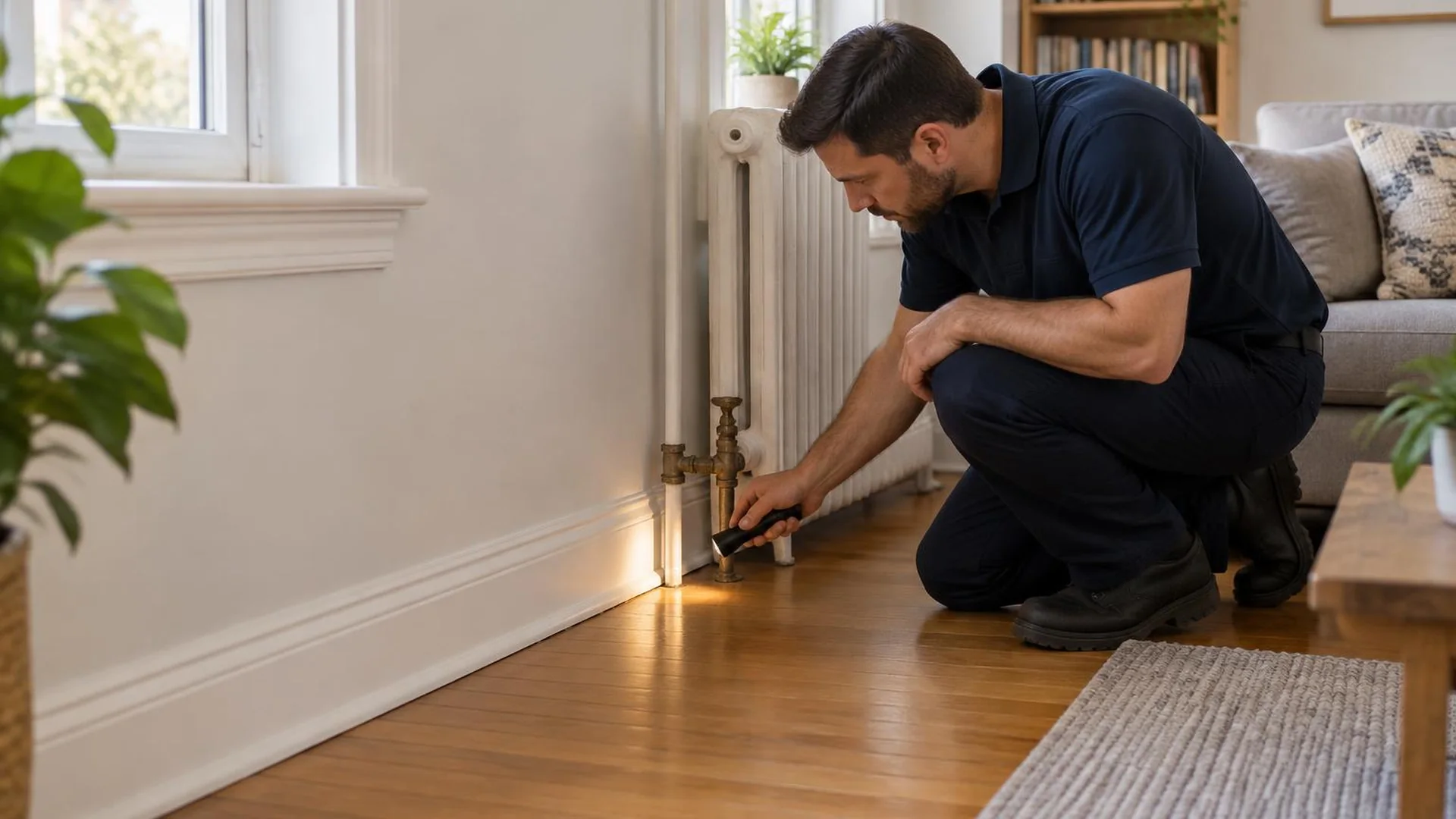
Table of Contents
- How do exterminators get rid of mice in walls?
- Why inspection comes first
- Do exterminators have to open the walls to get mice out?
- What does a mouse exterminator actually use?
- How long does it take to get rid of mice in walls?
- Will the mice come back after extermination?
- What are the signs of mice in the house?
- What about the dead mouse smell?
- How do you clean up mouse droppings and nests safely?
- When should you stop DIY and call a professional?
- How do you keep mice out of your walls for good?
- What to do next
Exterminators get rid of mice in walls by trapping them along their travel routes, not by tearing the walls open. A technician finds the entry points, places traps or locked bait stations where mice run, seals every gap, and returns to confirm that activity has stopped. Most homes see a clear drop in one to two weeks.
It is 2 a.m. and something is scratching inside the wall beside your bed. By 7 a.m. you have decided the walls will have to come down, and by 7:05 you have remembered you like your drywall.
Good news: they almost never have to. This guide walks through what a mouse exterminator does, in order, and what you can expect when the mice are in the walls. It also covers the smell, the droppings and the cleanup that nobody warns you about. If you would rather have a technician look at it, our mice control service starts with a free inspection.
How do exterminators get rid of mice in walls?
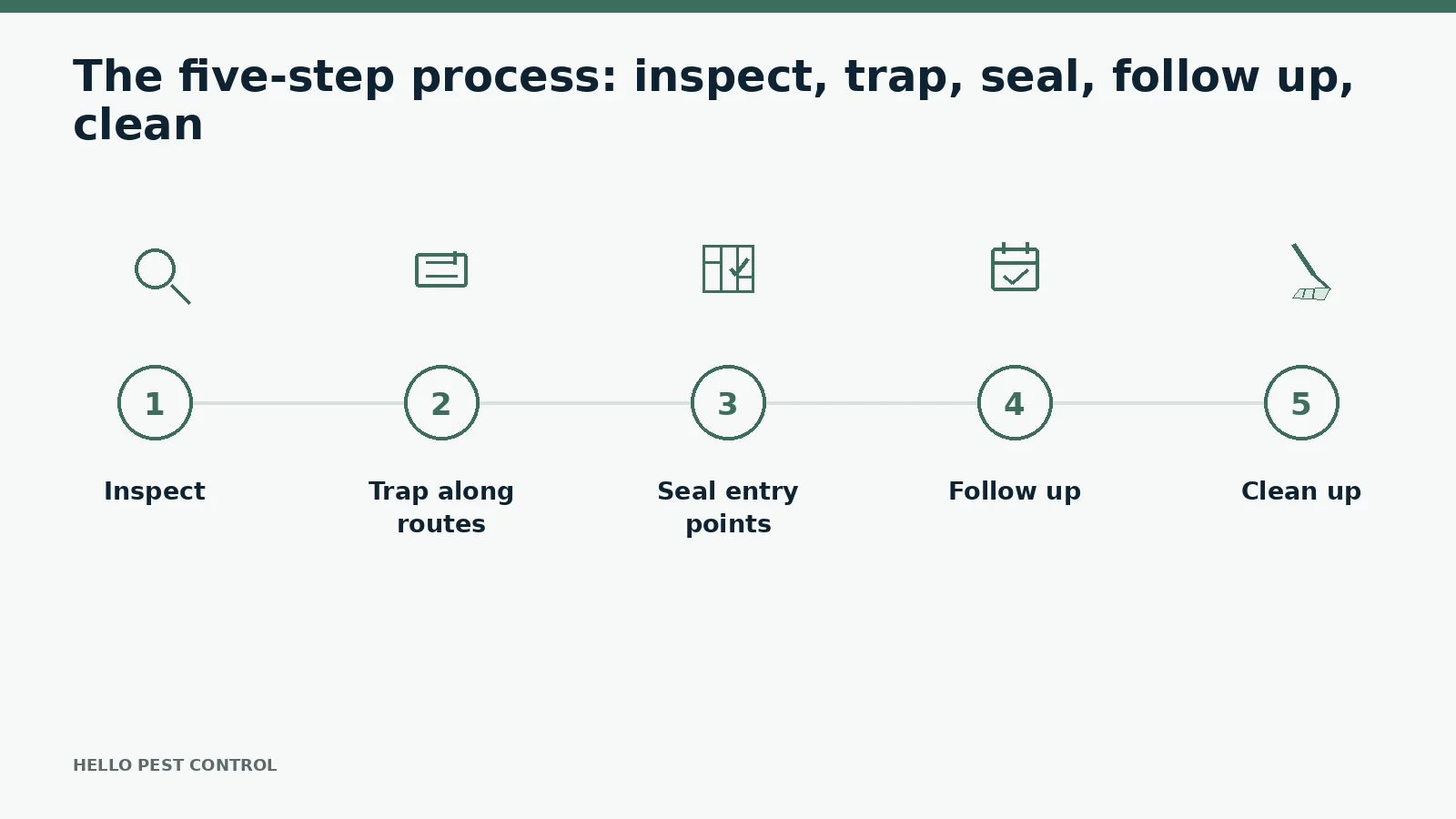
Exterminators work in five steps: inspect, trap, seal, follow up and clean up. The order matters because sealing before the mice are gone traps them inside, and trapping without sealing invites the next group in.
- Inspect inside and out. Look for droppings, rub marks, gnaw marks and the gaps mice use to get in.
- Trap or bait along travel routes. Mice use wall edges, pipes and gaps to move, so devices go where they run.
- Seal the entry points. Close every gap with materials mice cannot chew through.
- Follow up. Return to check, reset and confirm no new activity.
- Clean up and prevent. Deal with droppings and nesting material, then fix what drew the mice in.
The wall is the highway. The kitchen is the restaurant. A mouse that scratches inside a wall at night is commuting to the pantry, so the trap goes on the commute route, not inside the drywall.
Why inspection comes first
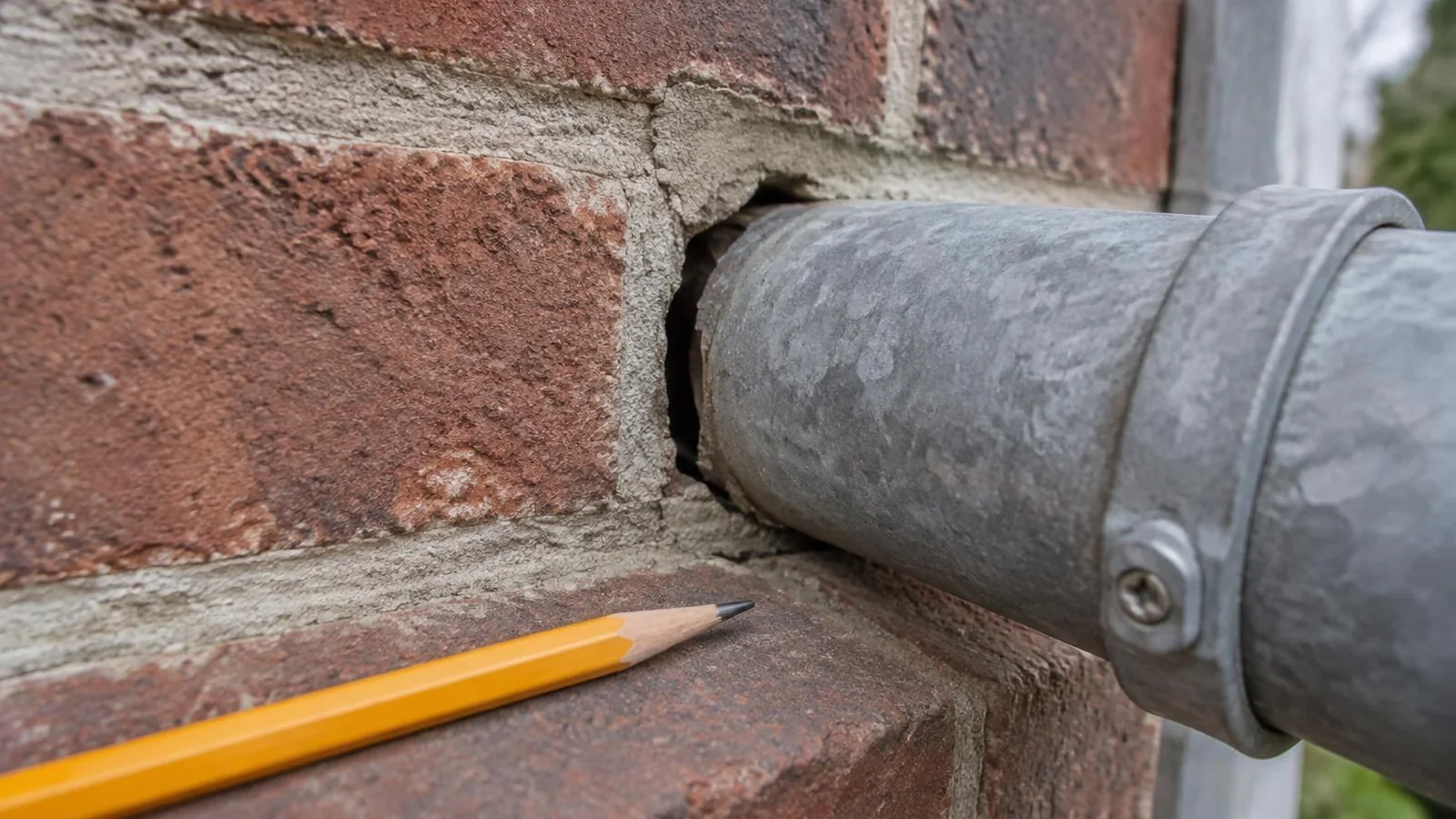
An inspection tells a technician where mice get in and where they nest, which decides everything after. Mice can squeeze through an opening of about a quarter inch, roughly the width of a pencil, so a technician checks utility lines, the foundation, rooflines and door frames as well as the room you hear noise in. In older GTA homes, including century houses in Toronto and ravine-side homes near Highland Creek and the Bluffs, there are usually several.
Do exterminators have to open the walls to get mice out?
Usually no. Mice in a wall are travelling through it to reach food and water, so a technician can catch them where they come out, at the wall edges, in basements and behind appliances. Cutting into drywall without strong evidence mostly makes a mess, because sound and smell often travel farther along a cavity than they appear to.
Walls do sometimes get opened. A visible stain on the drywall, a nest known to be in a specific spot, or a dead mouse located by sound and smell can justify a small access cut. That is a decision made with a technician, not a first step.
What does a mouse exterminator actually use?
A mouse exterminator uses snap traps, enclosed bait stations, sometimes live-catch traps, and exclusion materials for sealing. Which ones depend on where the mice are and who else lives in the house.
- Snap traps. The most common and lowest-cost method, placed along runways and walls.
- Locked bait stations. Tamper-resistant boxes that keep bait away from children and pets, used where the site allows.
- Live-catch traps. They cost more and need extra visits to remove the animals, so they suit specific situations.
- Exclusion materials. Galvanized steel mesh and sheet metal last longer than foam or caulk alone, and quarter-inch hardware cloth blocks mice.
Loose bait indoors is where the trouble starts. A mouse that eats it can crawl into a wall and die there, and the smell can last from several days to a few weeks. That is why many professionals favour traps inside living spaces. Our approach follows integrated pest management, which places treatments out of reach of kids and pets.
How long does it take to get rid of mice in walls?
Most homeowners see a clear drop in activity within one to two weeks, and full resolution, meaning no fresh signs for at least a week, usually takes two to four weeks. Larger infestations and rats take longer.
| When | What usually happens |
|---|---|
| Visit one | Inspection, traps or stations placed, first gaps sealed |
| First week | Most catches happen, noises start to fade |
| One to two weeks | Follow-up visit, traps checked and reset |
| Two to four weeks | No fresh droppings or noise, sealing confirmed |
Timelines are typical figures from HomeStars’ 2026 rodent guide, not a promise. Ask your technician for specific follow-up dates before the first visit ends.
Will the mice come back after extermination?
They come back only if a gap stays open or a new one appears. Trapping clears the mice inside, and sealing decides whether more arrive. A house with eight entry points and six sealed is still a house with two doors.
Check the seals after heavy weather and each fall. Mice move indoors as nights cool, usually from October, which is why the weeks before the first frost are the best time to inspect.
What are the signs of mice in the house?
The most common signs are droppings, gnaw marks, greasy rub marks along baseboards, night noises, a musky smell and shredded nesting material. House mouse droppings are about 3 to 6 millimetres long with pointed ends, and one mouse can leave around 50 a day, according to University of Arizona Cooperative Extension.
| Sign | What you see | What it tells you |
|---|---|---|
| Droppings | Dark, rice-shaped, 3 to 6 mm | Fresh ones are soft and dark, old ones dry and grey |
| Gnaw marks | Small, paired teeth marks on wood, wiring, packaging | Active chewing, and a fire risk near wires |
| Rub marks | Greasy smudges along walls | A regular route |
| Noise | Scratching or scurrying at night | Mice in walls or ceilings |
| Smell | Musky, stale odour in a closed room | An established problem |
| Nest | Shredded paper, fabric or insulation | A breeding site |
Rat droppings are larger, up to about three-quarters of an inch for Norway rats, so size helps you tell which animal you have. If it is rats, the rat control page covers that treatment.
What about the dead mouse smell?
A dead mouse in a wall can smell from a few days to several weeks, depending on its size, the temperature and how damp the cavity is. Dry air helps the body dry out sooner, and damp keeps the smell going. Technicians often read the smell as a sign the treatment worked, because it usually means the mouse they were after is in there.
What you can do:
- Ventilate the room and keep the area dry.
- Look for the spot where the smell is strongest, or where flies gather, and check for a stain.
- If you cannot find it, wait it out and avoid cutting into the wall blindly.
- Call a professional if the smell is overwhelming or you suspect something larger than a mouse.
How do you clean up mouse droppings and nests safely?
Wet the droppings first, then wipe them up. The Government of Canada’s hantavirus guidance says not to sweep or vacuum rodent droppings, because that sends particles into the air where you can breathe them in. In Canada hantavirus is mainly linked to deer mice, but you cannot tell by looking, so treat every dropping the same way.
- Ventilate. Open windows and doors and leave the area for about 30 minutes.
- Protect yourself. Wear rubber or plastic gloves, and a disposable N95 respirator if there is a lot of contamination.
- Wet it down. Soak droppings, nests and dead mice with household disinfectant or diluted bleach, about 1 part bleach to 9 or 10 parts water. Let it sit for 5 to 10 minutes.
- Wipe, don’t sweep. Pick it up with paper towels or a wet mop and seal everything in a plastic bag.
- Wash up. Clean your gloves with disinfectant and hot soapy water before taking them off, and wash your hands.
Launder bedding and fabrics in hot water. Heavy contamination in an attic, with soiled insulation, is a bigger job and is usually handled as a separate sanitation service.
Hearing scratching in the walls? A technician can find the entry points first.
Book a Free InspectionWhen should you stop DIY and call a professional?
Call when the problem is in the walls or ceiling, in more than one room, or has survived your own traps. Snap traps and steel mesh are fair tools for one or two mice caught early. They are poor tools for a colony you cannot see.
Call a professional if you:
- hear scratching in walls or the ceiling at night
- find droppings in several rooms
- have trapped mice and new ones keep appearing
- find a nest or chewed wiring
- smell something dead and cannot find it
- see anything larger than a mouse
For what the work costs, see our mouse exterminator cost guide. If you are selling, rodent removal before selling a Toronto home covers what buyers’ inspectors notice.
How do you keep mice out of your walls for good?
Seal the gaps, remove food and shelter, and check the seals each fall. Sealing is the step that decides whether the problem returns.
- Seal gaps around pipes, vents and utility lines with galvanized steel mesh or sheet metal, not foam alone.
- Fit door sweeps, and repair damaged screens and weather stripping.
- Store food, pet food and bird seed in hard containers, not paper bags.
- Keep firewood and clutter away from the house, and trim branches that touch the roof.
- Clear basement and garage clutter that works as nesting material.
What to do next
Write down what you have heard and seen, and photograph droppings or gaps. If it is one mouse, set snap traps along the wall and seal what you find. If it is noise in the walls, droppings in several rooms or a smell you cannot trace, book a technician.
Hello Pest Control looks at the entry points first, removes the mice, seals the gaps and comes back to confirm activity has stopped. We serve homes across the GTA, including Toronto and Scarborough. Call 437-556-3606 or book online.
Ready to get the mice out of your walls?
Call 437-556-3606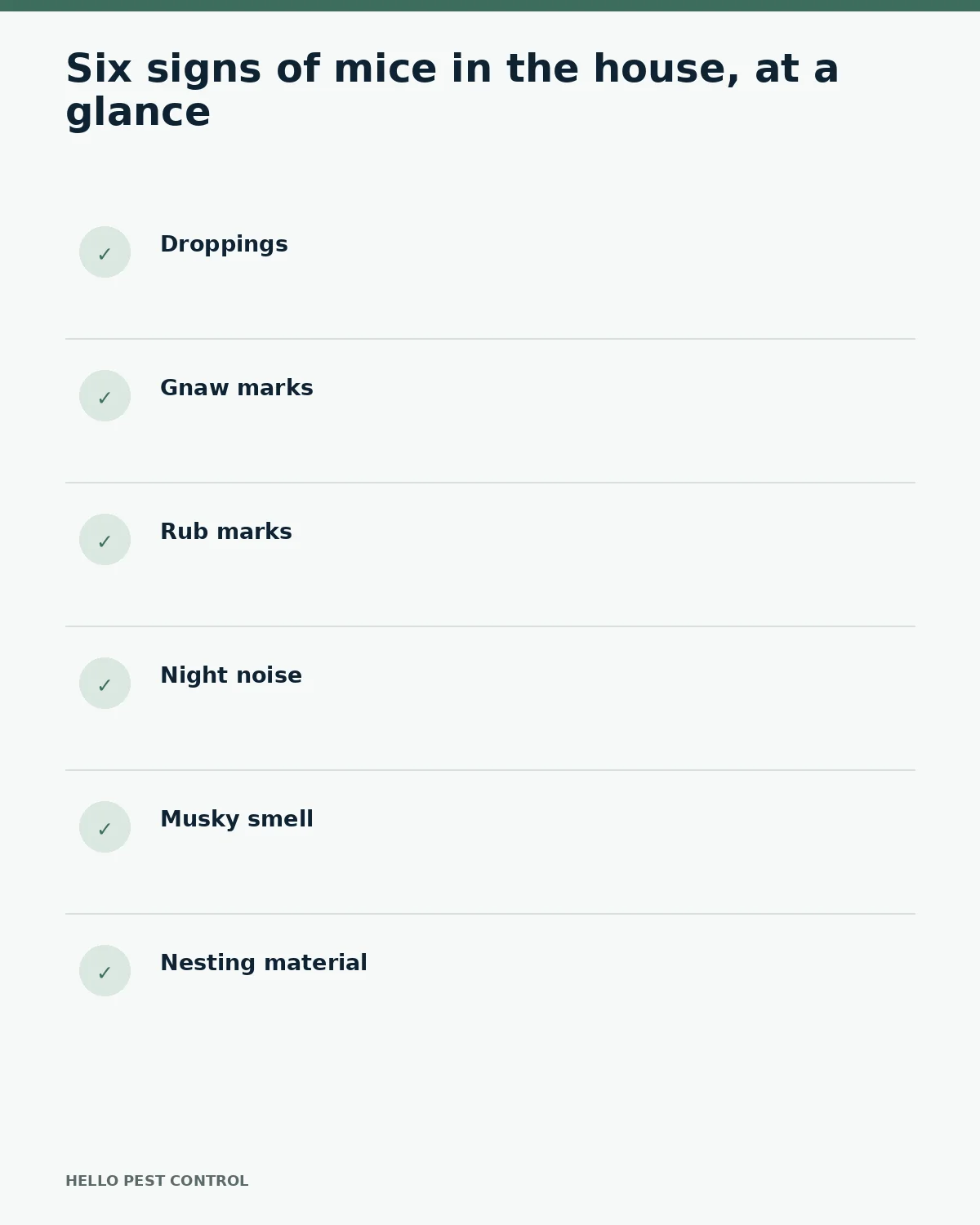
Related Reading

How Much Does a Mouse Exterminator Cost in Toronto and the GTA?
Mouse exterminator cost in Toronto and the GTA: typical Canadian ranges, what pushes a quote up, and six questions to ask before you say yes.
Rodent Removal in Toronto Before Selling Your Home
Selling in Toronto? Why rodent removal before listing protects your asking price, avoids home inspection red flags and keeps buyers confident.
Frequently Asked Questions
Will an exterminator get rid of mice for good?
Yes, when the job includes sealing the entry points. Trapping removes the mice already inside, but new ones will follow the same gaps. Ask whether sealing and a follow-up visit are part of the plan before you book.
What poison do exterminators use for mice?
It depends on the site, and the product matters less than where it goes. Professionals keep bait in locked stations, away from children and pets, and often prefer traps inside living spaces so no mouse dies inside a wall. Ask your technician what they plan to use and where.
Do exterminators clean up mouse droppings?
Practices differ. Light droppings are sometimes handled during the visit, while heavy contamination in attics or insulation is usually a separate sanitation job. Ask for cleanup to be named in the quote so nothing is assumed.
How long does a dead mouse smell last in a wall?
From a few days to several weeks. Size, temperature and humidity all matter, and a damp wall keeps the smell going longer. Ventilate, keep the area dry, and call a professional if the smell is strong or you cannot find the source.
Can I use peppermint oil or ultrasonic devices to get mice out of walls?
They are weak tools. Peppermint oil may deter some pests briefly, but it does not remove mice already nesting, and sealing gaps does the real work. Ultrasonic devices are sold widely, but we would not rely on them for an active problem.
How do I know the mice are gone?
Look for a full week with no fresh droppings, no new gnaw marks and no night noises, and check that every sealed gap is still intact. Most homes see a big drop in activity within one to two weeks, and full resolution can take two to four.